
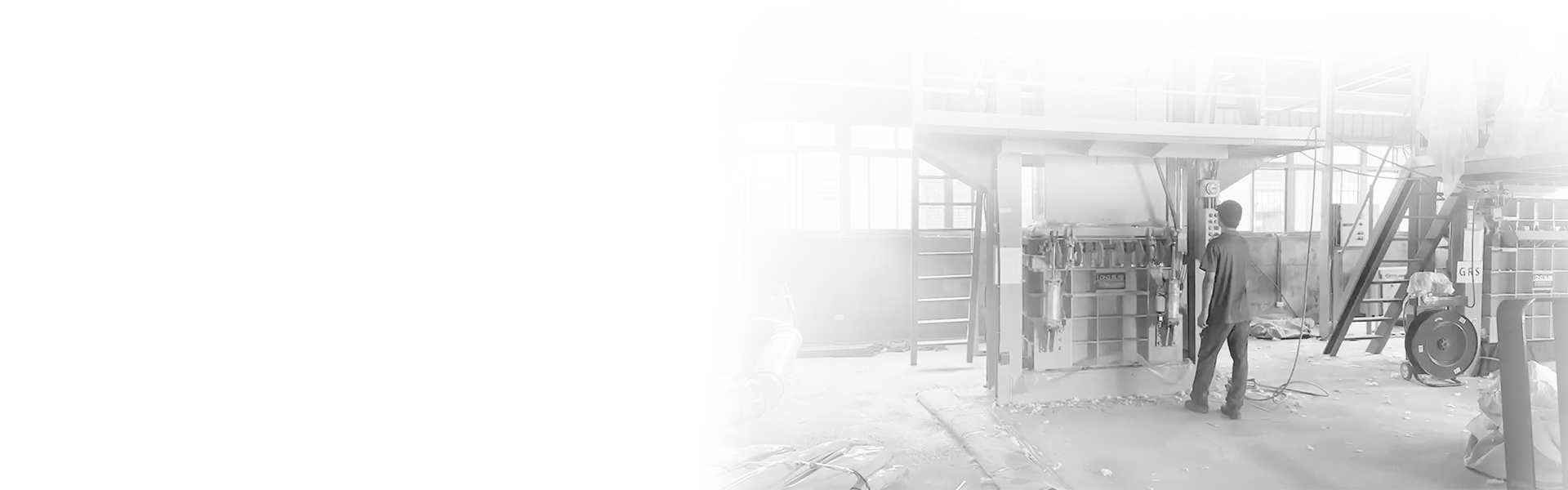
Non-woven Recycling System
Efficient fiber recovery for post-industrial non-woven waste.
Our Non-Woven Recycling System is designed to handle various forms of non-woven waste, including industrial production waste and edge trims. It integrates multiple non-woven fabric recycling machines, each responsible for a specific processing stage within the recycling line.
This system combines cutting, feeding, fiber opening, intermediate storage, baling, and dust control into a single recycling line. By maintaining stable material flow and continuous operation, the system helps condition non-woven waste into reusable fiber material with consistent quality, making it well-suited for manufacturers engaged in non-woven production.
Recycling Process
The non-woven recycling system connects automated machines in sequence to process non-woven waste for fiber reuse. Together, these non-woven fabric recycling machines operate as a coordinated line, ensuring stable material handling throughout the recycling process.
Cutting (LB-107)

Feeding (LB-203)

Fiber Opening (LB-409)

Fine Opening (LB-407)

Intermediate Storage (SB)

Baling (LB-502D)

Supporting Measure – Dust Collection (LB-701)
Advanced Process Notes
Integrated Equipment of the Recycling System
The non-woven recycling system integrates the following equipment to form a complete and coordinated processing line.
FAQs
How does the Non-Woven Recycling System handle different sizes of non-woven production waste?
The LB-107 Fabric Cutting Machine processes input material through two cutting stages to reach a consistent size before opening. Once cut, the material is conveyed by an air blower to the feeding stage without manual intervention.
How does the system manage material surges and keep the baling process running smoothly?
The LB-203 Auto Feeder buffers and meters material, feeding it into the fiber opening stage at a controlled, consistent rate. Processed fibers then pass into the Storage Box (SB), which buffers short-term fluctuations in fiber flow, so the LB-502D Baling Machine receives a steady supply and compresses it into compact, stackable bales.
